
How to Create a Fashion Tech Pack for Clothing Manufacturers: Step-by-Step Guide
How to Create a Fashion Tech Pack for Clothing Manufacturers: Step-by-Step Guide
By Annette Miller | La Mode College
You have an idea for a clothing collection. You know how you want your garments to look, you’ve found inspiration, and perhaps you’ve even started contacting clothing manufacturers.
But then your manufacturer asks you a question:
“Can you send us your tech pack?”
If you’re new to fashion design or starting your first clothing brand, you might have no idea what they’re asking for.
The good news? Creating a fashion tech pack is a skill you can learn, even if you have no previous experience in the fashion industry.
A professional tech pack translates your creative ideas into the technical information a clothing manufacturer needs to develop your garments.
And learning how to create one is one of the most valuable practical skills you can develop as an aspiring fashion designer or clothing-brand founder.
In this guide, we’ll explain exactly what goes into a fashion tech pack, how to create one step by step, which software you can use, and how to avoid expensive mistakes when working with clothing manufacturers.
What Is a Fashion Tech Pack?
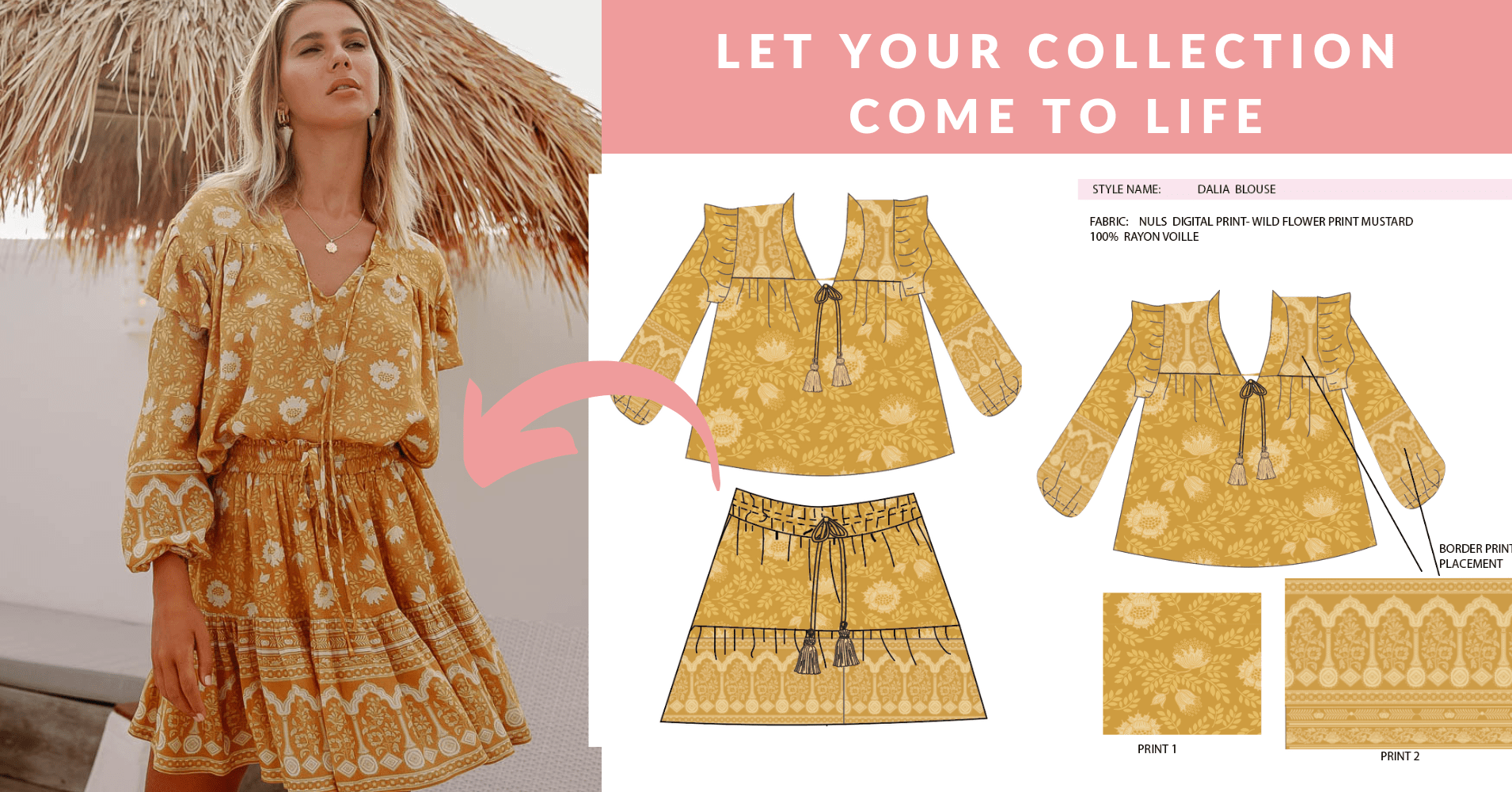
A fashion tech pack (technical package) is a detailed document that communicates how a garment should be made.
Think of it as the blueprint for your clothing design.
While a fashion illustration shows the creative vision behind a garment, a tech pack provides the technical instructions required to turn that vision into a physical product.
A typical clothing tech pack includes:
- Front and back technical fashion drawings.
- Garment measurements and sizing specifications.
- Fabric composition and material details.
- Construction and stitching instructions.
- Colours, prints and artwork placement.
- Buttons, zippers, labels and other trims.
- Packaging requirements.
- Sample comments and design revisions.
Clothing manufacturers use this information to understand your design, prepare quotations, develop patterns, produce samples and manufacture garments.
In simple terms: a fashion sketch shows what you want to create. A technical drawing in a tech pack explains how it should be created.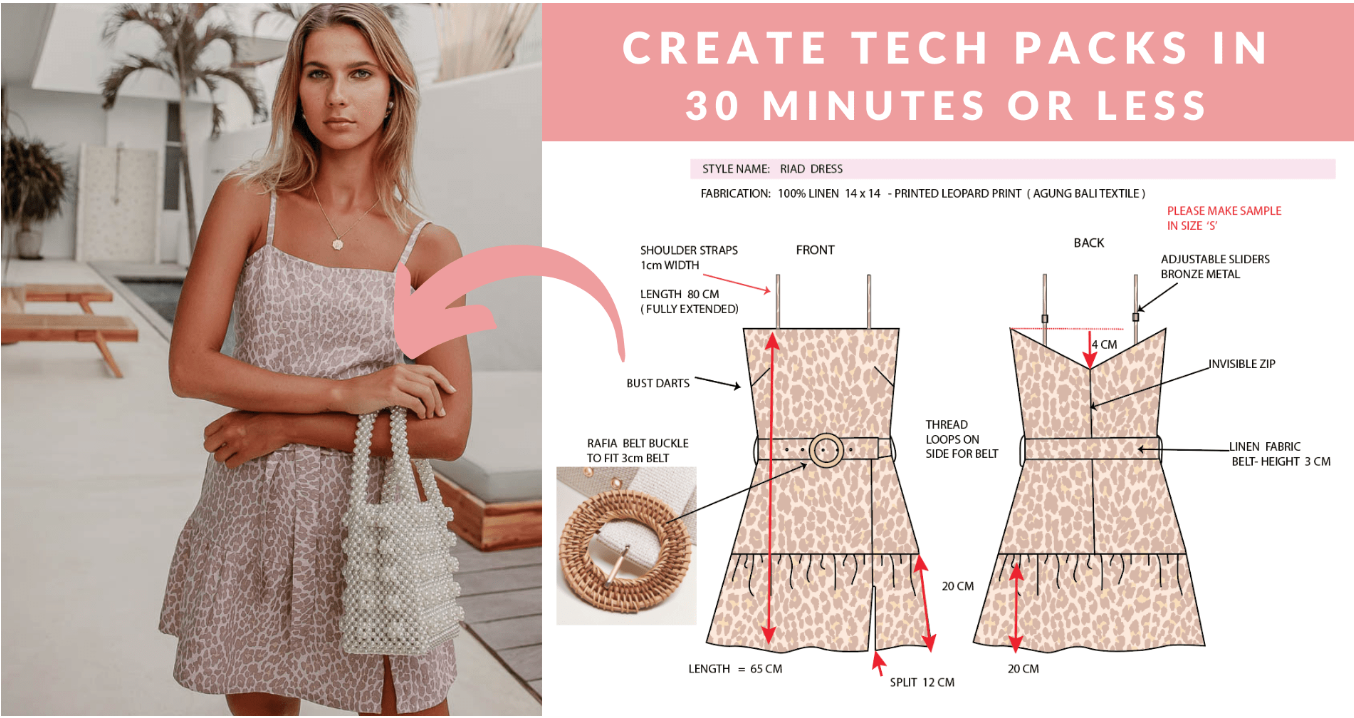
Why Is a Fashion Tech Pack Important?
Imagine sending a manufacturer a photograph of a beautiful linen dress.
You might assume they can recreate the garment simply by looking at the image.
But there are dozens of details the photograph cannot communicate.
What is the exact fabric composition? How long should the dress be? Is the fabric lined? How wide should the neckline be? What stitching should be used? Where should the zipper sit?
Without clear specifications, the manufacturer must make assumptions.
And those assumptions might not match your expectations.
A well-prepared tech pack helps you:
1. Communicate your designs accurately
Manufacturers can understand the garment’s intended measurements, materials and construction without relying entirely on verbal explanations.
2. Reduce sampling mistakes
Clear instructions can reduce misunderstandings that lead to incorrect samples and unnecessary revisions.
3. Obtain more accurate manufacturing quotations
Factories can estimate materials, construction requirements and production costs more effectively when they understand what they’re being asked to make.
4. Maintain consistency across production
Once a sample is approved, the tech pack becomes an important reference for producing garments consistently.
5. Develop professional fashion design skills
Tech packs are widely used in fashion product development, making them an important skill for designers, product developers and people starting clothing brands.
Can You Send a Fashion Sketch to a Clothing Manufacturer?
Yes. A fashion sketch can be a useful starting point when discussing a design with a manufacturer.
However, a fashion sketch alone is usually not enough to communicate all the information required for accurate garment development.
There are three different types of drawings and documents worth understanding.
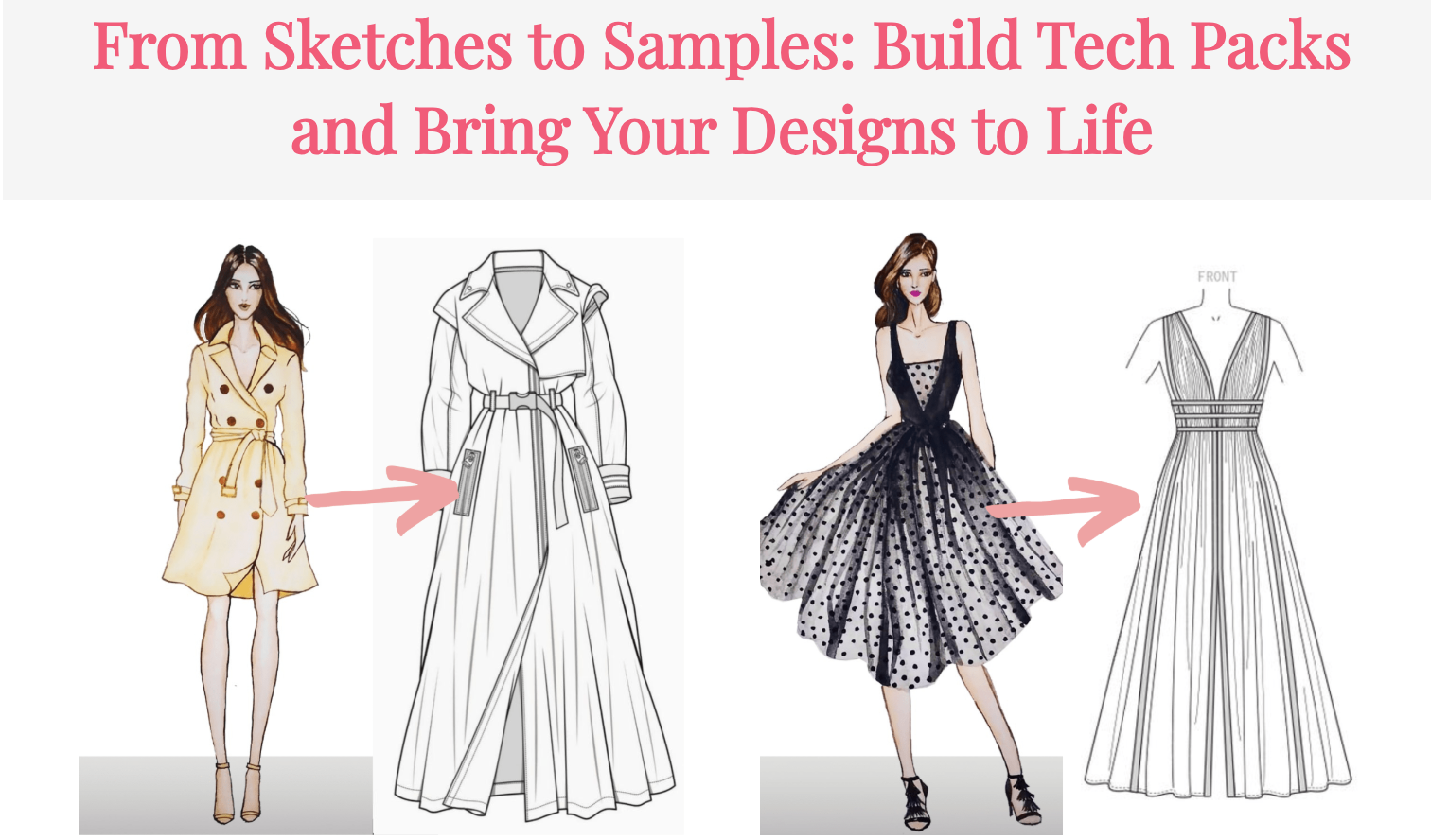
Fashion Illustration
A fashion illustration communicates the creative appearance of a garment.
It might show a dress on a fashion figure, including its silhouette, colours, fabric movement and styling.
Fashion illustrations are excellent for presenting collection concepts, but they don’t necessarily communicate precise construction details.
Technical Fashion Drawing
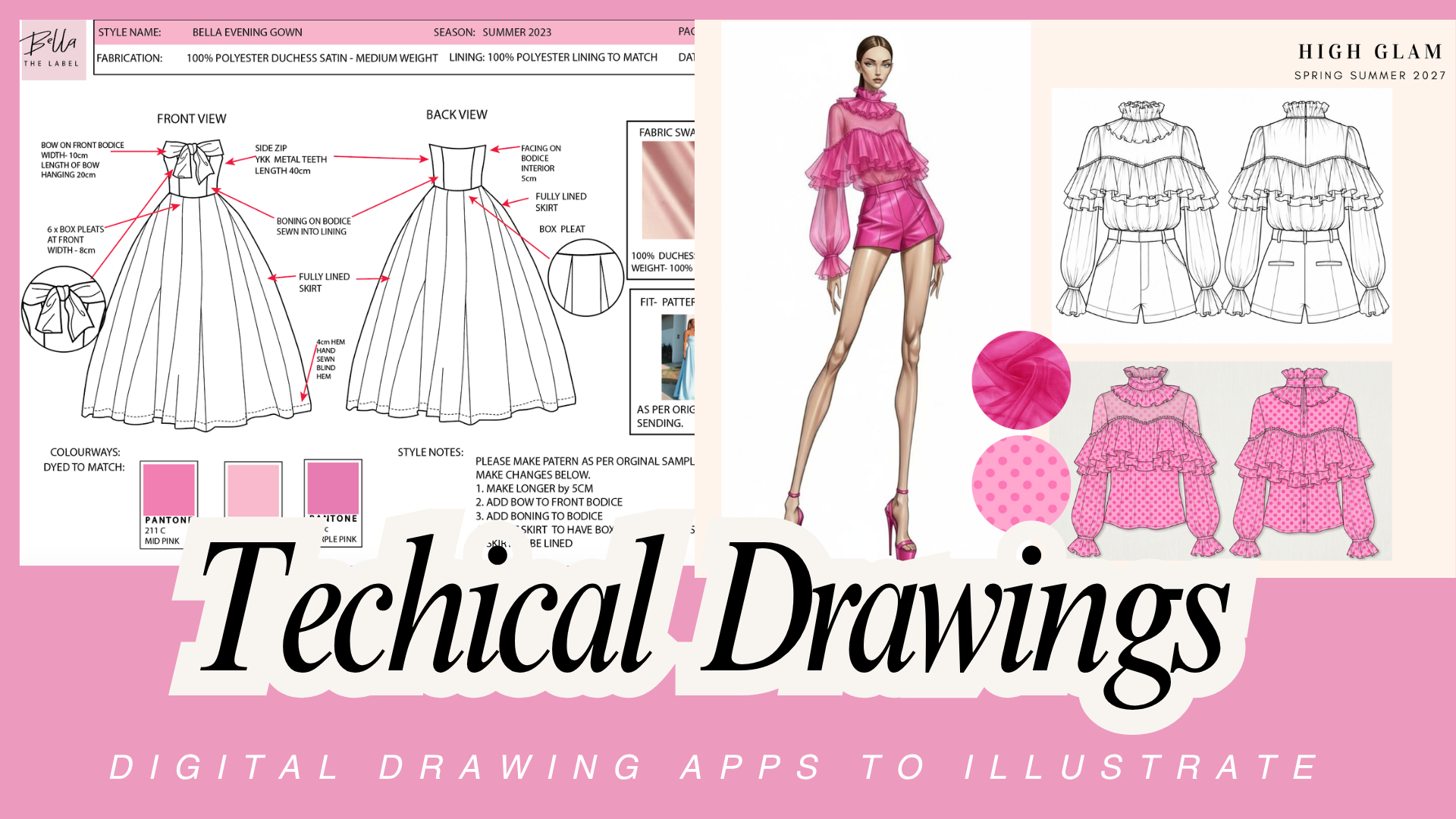
A technical fashion drawing, sometimes called a fashion flat sketch, shows the garment laid flat rather than on a model.
Technical drawings typically include front and back views, showing details such as:
- Necklines.
- Seams.
- Darts.
- Pockets.
- Waistbands.
- Closures.
- Stitching.
- Hems.
These drawings are usually created using clean lines and accurate proportions.
Fashion Tech Pack
A tech pack brings together technical drawings, measurements, materials and manufacturing instructions.
It provides the information required to develop the garment rather than simply illustrating its appearance.
If your goal is to manufacture clothing professionally, learning to create technical fashion drawings and tech packs is an important next step.
What Should a Clothing Tech Pack Include?
Although the exact requirements vary depending on the garment and manufacturer, most professional tech packs contain several essential sections.
| Tech Pack Component | What It Includes | Why It Matters |
|---|---|---|
| Style information | Style name, number, season and version | Identifies the correct garment |
| Technical drawings | Front, back and detail sketches | Communicates the garment’s design |
| Measurement specifications | Points of measure, dimensions and tolerances | Establishes intended fit and sizing |
| Fabric specifications | Composition, weight, construction and colour | Identifies the materials required |
| Bill of materials | Fabrics, trims, labels and components | Supports sourcing and costing |
| Construction details | Seams, stitching and finishing | Explains how the garment is assembled |
| Colourways and artwork | Colour references, prints and placement | Communicates visual details |
| Labels and packaging | Branding, care labels and packing requirements | Defines finishing requirements |
| Revision history | Changes and approval dates | Helps manage sampling and production |
Let’s walk through how to create these elements.
How to Create a Fashion Tech Pack: 7 Steps
For this example, imagine you’re starting a women’s clothing brand and want to manufacture a simple oversized T-shirt.
This is a useful beginner project because it allows you to practise technical drawings, garment measurements, fabric specifications and construction details without beginning with an overly complicated garment.
Step 1: Create Your Garment’s Technical Fashion Drawings
Start by drawing your garment from the front and back.
Unlike a fashion illustration, your technical drawing should show the garment without a model.
For an oversized T-shirt, your drawing might include:
- A relaxed body silhouette.
- A ribbed crew neckline.
- Dropped shoulders.
- Short sleeves.
- Side seams.
- A straight hem.
Add detail drawings wherever the construction needs further explanation.
For example, you might create a close-up illustration showing the neckline ribbing or sleeve hem.
What Software Can You Use?
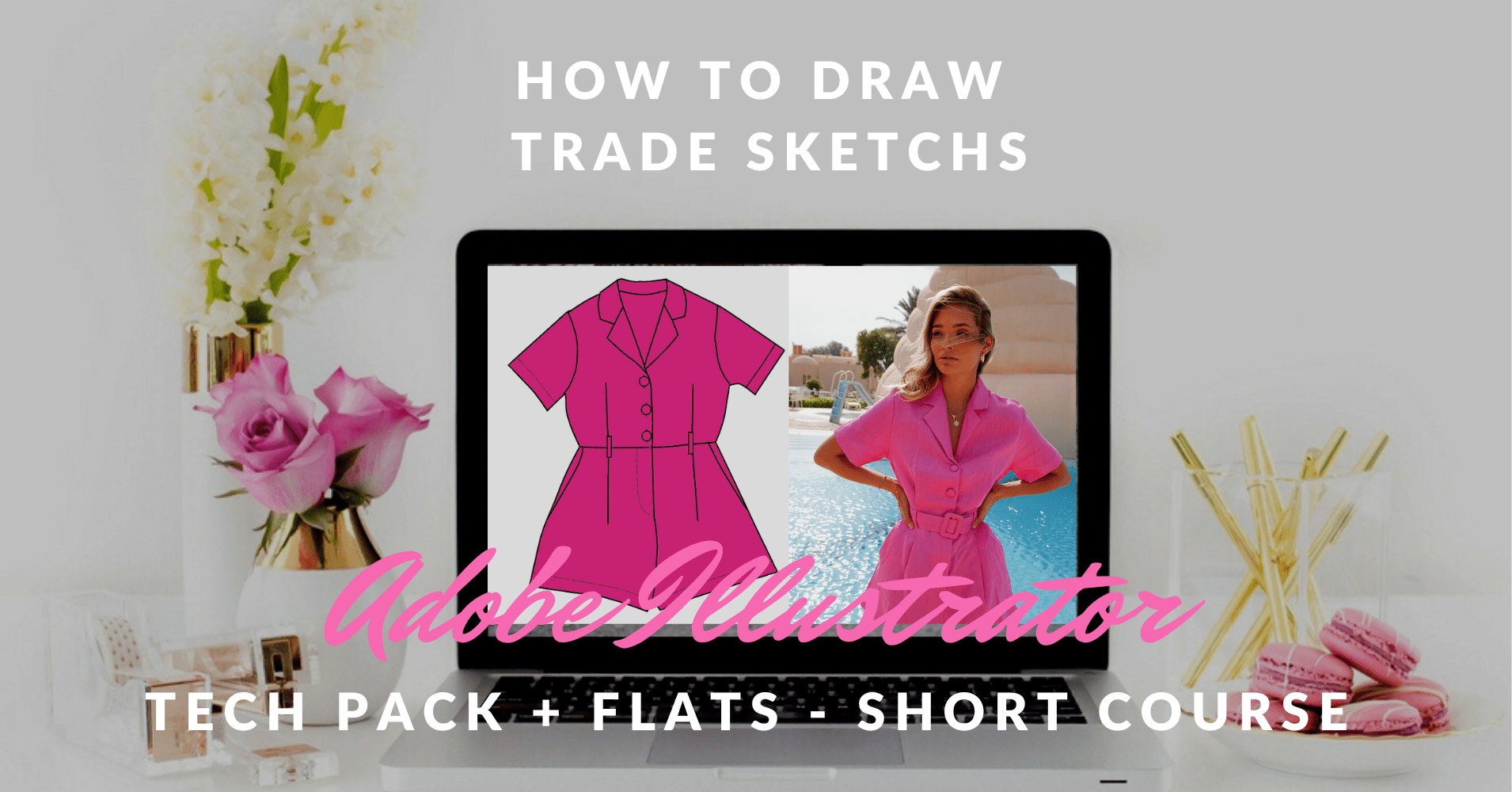
Adobe Illustrator is a popular choice for creating professional technical fashion drawings because it allows designers to create precise, editable vector artwork.
However, beginners may also use:
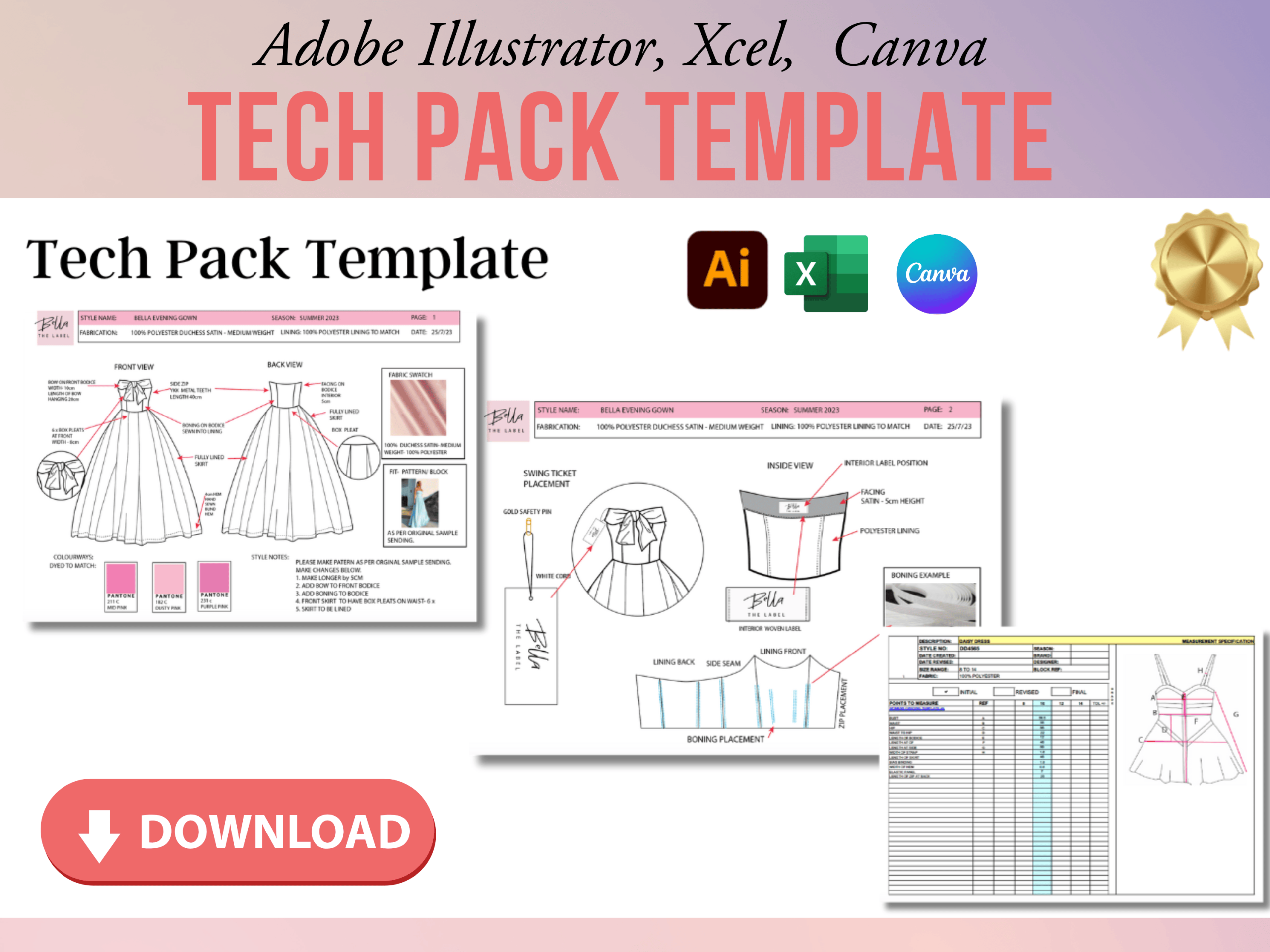
- Adobe Illustrator templates.
- Canva for basic layouts and presentations.
- Procreate for initial drawing concepts.
- Ai programs such as Look Fashion.
The important consideration is whether your final drawings clearly communicate the garment’s design.
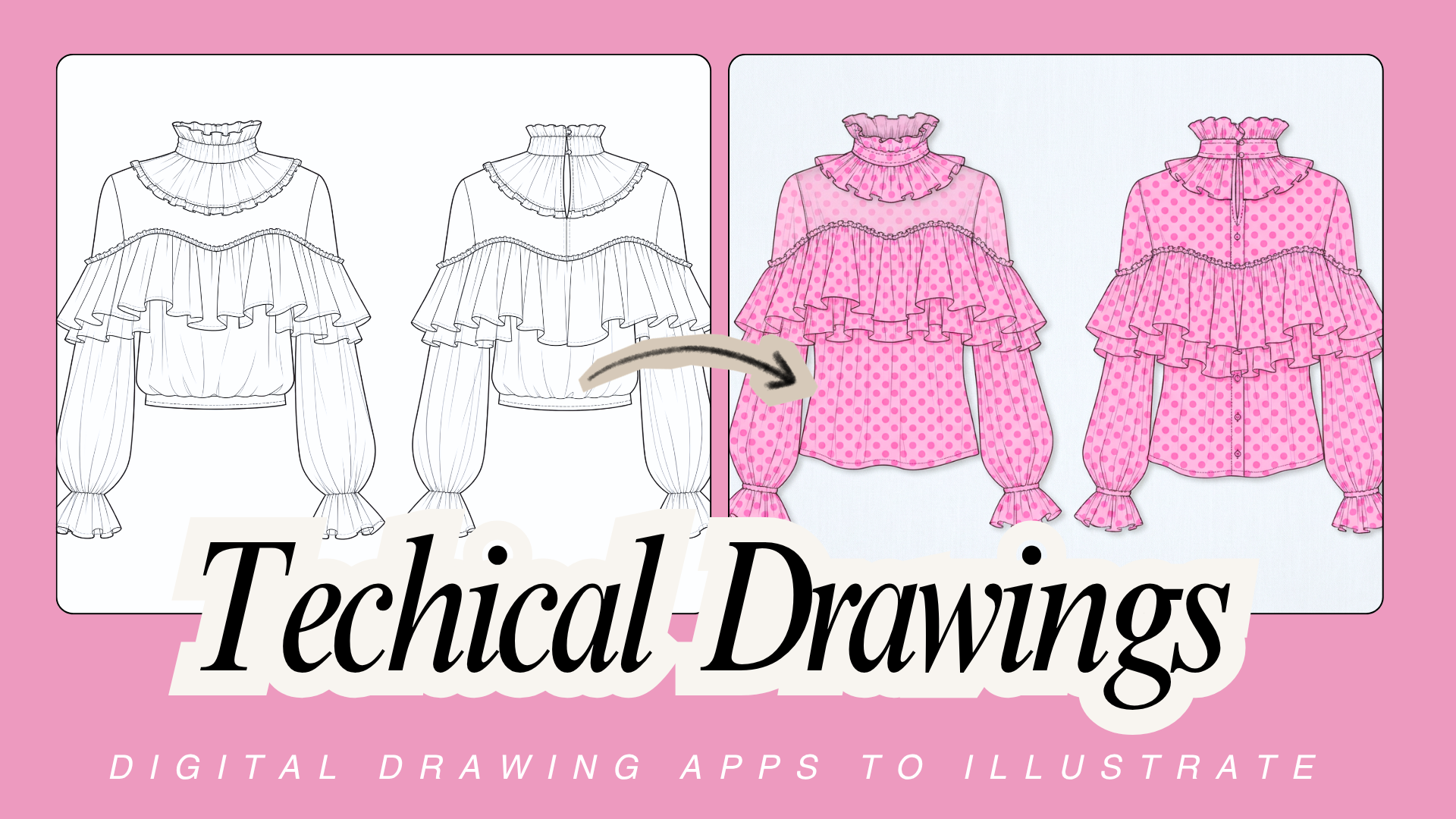 Professional tip: Keep your technical drawings simple, clean and easy to interpret. Decorative effects are less important than accurate construction details.
[Suggested image: Front and back technical flat sketches of an oversized T-shirt, with callouts identifying the neckline, sleeve hem, shoulder seam and body hem.]
Step 2: Create a Garment Measurement Specification Sheet
This is one of the most important parts of your fashion tech pack.
A garment specification sheet records the measurements that define your garment’s intended size and fit.
Manufacturers use these measurements when developing patterns and assessing samples.
What Are Points of Measure?
Points of measure, commonly abbreviated as POM, are specific locations on a garment where measurements are taken.
For a T-shirt, these might include:
- Body length.
- Chest width.
- Shoulder width.
- Sleeve length.
- Sleeve opening.
- Hem width.
- Neck opening.
Each measurement should have a clearly defined method so that you and your manufacturer measure the garment consistently.
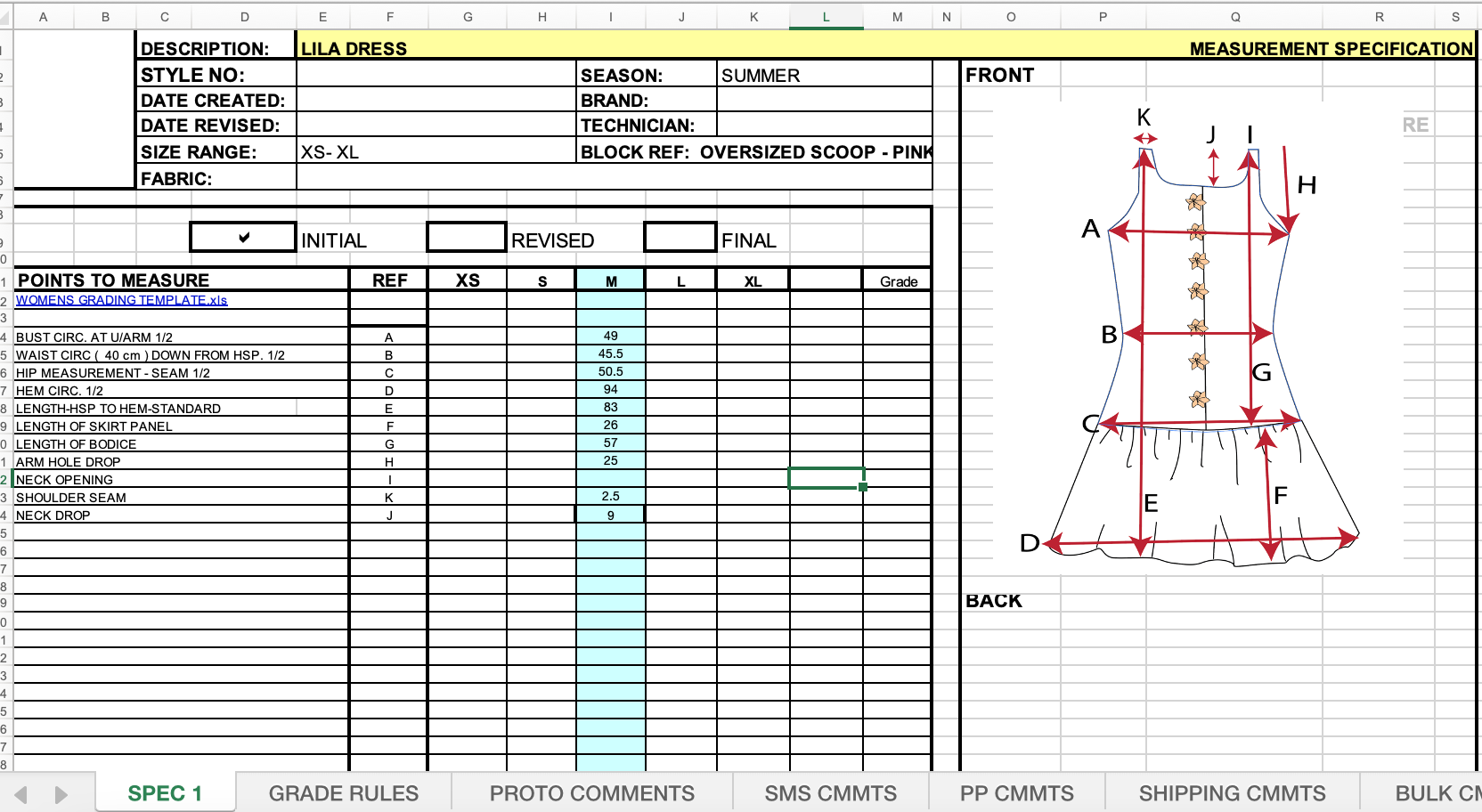
Example: Oversized T-Shirt Measurement Specification
The following is an illustrative learning example, not a production-approved size chart.
| POM | Measurement Description | Sample Size M |
|---|---|---|
| A | Body length, high shoulder point to hem | 68 cm |
| B | Chest width, measured flat below armhole | 58 cm |
| C | Shoulder width, seam to seam | 54 cm |
| D | Sleeve length, shoulder seam to sleeve hem | 22 cm |
| E | Sleeve opening, measured flat | 20 cm |
| F | Bottom hem width, measured flat | 58 cm |
All measurements are in centimetres.
Notice that the chest measurement is recorded as a flat measurement, not a full-body circumference.
This distinction is important.
If your garment measures 58 cm across the chest when laid flat, the approximate garment circumference at that point is 116 cm.
Confusing flat measurements with circumference measurements can result in major sizing mistakes.
What About Measurement Tolerances?
A measurement tolerance specifies how much variation is acceptable during production.
For example, if a garment’s target body length is 68 cm and its agreed tolerance is ±1 cm, garments measuring between 67 cm and 69 cm would fall within that tolerance for that particular measurement.
However, tolerances should be agreed with your technical team or manufacturer.
They depend on the fabric, garment construction and importance of the measurement.
Professional tip: Include a technical drawing that shows exactly where each point of measure begins and ends. This helps prevent misunderstandings.
[Suggested image: An oversized T-shirt technical drawing with measurement arrows labelled A–F, corresponding to the specification table above.]
Step 3: Specify Your Fabric and Materials
Choosing the right fabric is essential because it affects how your garment looks, feels, fits and performs.
For example, two fabrics may both be described as cotton jersey, yet have very different weights, stretch characteristics and finishes.
Your tech pack should provide as much relevant information as possible.
Example Fabric Specification
For our oversized T-shirt, an illustrative fabric specification might look like this:
| Specification | Example |
|---|---|
| Fabric type | Single jersey knit |
| Composition | 100% cotton |
| Weight | 220 GSM |
| Colour | Soft pink — approved reference required |
| Finish | Soft hand feel |
| Neckline trim | Matching cotton rib |
| Fabric supplier | To be confirmed |
What does GSM mean?
GSM stands for grams per square metre.
It measures fabric weight.
A higher GSM generally indicates a heavier fabric, although fabric structure and fibre composition also influence how a garment feels and drapes.
When working with manufacturers, it’s also useful to provide fabric swatches or approved fabric references.
Create a Bill of Materials
A bill of materials, or BOM, lists the components required to produce your garment.
For our T-shirt, this could include:
| Component | Specification |
|---|---|
| Main fabric | 220 GSM cotton jersey |
| Neckline rib | Matching cotton rib |
| Sewing thread | Matching colour |
| Main brand label | Woven label |
| Size label | Printed or woven |
| Care label | Fibre composition and care instructions |
| Hangtag | Brand artwork |
| Packaging | As agreed with manufacturer |
A production-ready BOM may also include supplier references, quantities, consumption estimates and approved material codes.
This information helps manufacturers source materials and prepare more accurate costings.
Step 4: Add Garment Construction and Stitching Details
Your manufacturer needs to understand how the garment should be assembled.
For a simple T-shirt, this may include instructions for:
- Shoulder seams.
- Side seams.
- Neckline attachment.
- Sleeve construction.
- Sleeve hems.
- Bottom hem.
- Labels.
For example, you might specify that the garment should have an overlocked internal seam and a coverstitched hem, subject to confirmation with the manufacturer.
For more complicated garments, you may need to specify:
- Seam allowances.
- Stitch types.
- Stitch density.
- Pocket construction.
- Zipper placement.
- Lining attachment.
- Interfacing.
- Reinforcement stitching.
These details can affect garment appearance, quality, durability and manufacturing cost.
Beginner tip: If you don’t know the correct technical term for a particular construction method, use a clear reference photograph and discuss the intended finish with your manufacturer.
Over time, learning professional garment construction terminology will make these conversations easier.
Step 5: Include Colourways, Prints and Artwork
If you’re developing a collection with multiple colours or prints, your tech pack should clearly identify each version.
For example, your T-shirt might be available in:
- Soft pink.
- Cream.
- Chocolate brown.
Avoid relying entirely on colour names.
One manufacturer’s interpretation of soft pink may be different from yours.
Instead, provide approved colour standards, physical swatches or other agreed references.
What If Your Garment Has a Print?
If your garment includes a placement print, logo or embroidery, specify:
- Artwork dimensions.
- Placement measurements.
- Print colours.
- Printing or embroidery method.
- Artwork file references.
- Any relevant production requirements.
For example:
Front placement print: 20 cm wide, positioned centrally on the front body, with final placement approved against the sample.
If you’re creating a repeat print, provide the artwork file and repeat specifications agreed with your fabric printer or manufacturer.
Professional tip: Create and retain editable artwork files. This makes it easier to adjust print sizes, colours and placement during sampling.
Step 6: Add Branding, Labels and Packaging Requirements
Your garment isn’t finished when the sewing is complete.
You may also need to specify how it will be branded, labelled and packaged.
Your tech pack can include:
Brand labels
Where should the main brand label be positioned?
Size labels
Will the garment use Australian, UK, US or another sizing system?
Care labels
What fibre composition and care instructions need to appear?
Hangtags
What artwork, size and attachment method will be used?
Packaging
Should the garment be folded individually, packed in a protective bag or prepared according to another agreed packing method?
Labelling requirements vary by product and destination market, so make sure the final label content meets applicable regulations.
For a new clothing brand, these details contribute to both product presentation and production consistency.
Step 7: Review Your Tech Pack Before Sending It to a Manufacturer
Before sending your tech pack, review it carefully.
Ask yourself:
Could someone who has never seen my design understand what I want manufactured?
Check that your tech pack includes:
- The correct style name and reference number.
- Front and back technical drawings.
- All necessary construction details.
- A clearly defined base size.
- Measurement specifications and measuring methods.
- Appropriate measurement tolerances.
- Fabric and trim requirements.
- Colour and artwork references.
- Label and packaging instructions.
- A document version number and date.
If information is still being finalised, clearly identify it as TBC — To Be Confirmed rather than allowing the manufacturer to assume it has been approved.
 Why Version Control Matters
Imagine approving a sample, then changing the neckline width.
If your manufacturer accidentally works from the original tech pack, the next sample or production run may use the wrong measurement.
To reduce this risk, identify each revision clearly.
For example:
Style: LMC-001
Version: V2
Date: 2 November 2026
Revision: Neckline width updated following first sample review.
Always confirm that the manufacturer has received the latest approved version.
Can You Create a Fashion Tech Pack Using Canva, Adobe Illustrator or AI?
Yes. There are several ways to create a fashion tech pack, depending on your experience, budget and the complexity of your garment.
However, the software you use is less important than the accuracy of the information you provide.
Adobe Illustrator for Fashion Tech Packs
Adobe Illustrator is commonly used for professional fashion technical drawings.
It allows designers to create vector-based artwork that can be edited, resized and reused.
You can use Illustrator to:
- Draw front and back garment flats.
- Illustrate stitching and construction details.
- Create artwork and print placements.
- Build reusable technical drawing templates.
- Prepare visual specifications for manufacturers.
For aspiring fashion designers, learning Illustrator can be valuable because it supports a range of technical design tasks.
 Canva for Fashion Tech Packs
Canva can be useful for organising information into a visually clear document.
For example, you could use Canva to combine:
- Existing technical drawings.
- Fabric references.
- Garment photographs.
- Measurement tables.
- Written construction instructions.
However, Canva is not a direct replacement for specialist technical drawing and product development skills.
You’ll still need accurate drawings, measurements and construction information.
Can AI Create a Fashion Tech Pack?
AI tools are increasingly being used to assist with fashion design workflows.
Depending on the tool, AI may help with:
- Organising garment specifications.
- Drafting measurement-table layouts.
- Identifying missing information.
- Preparing first drafts of construction notes.
- Formatting technical documents.
- Supporting parts of the technical drawing process.
However, AI-generated measurements and manufacturing instructions should never be assumed to be accurate simply because they look professional.
For example, AI cannot reliably determine the exact fit of a garment from a fashion inspiration image alone.
Measurements need to be developed and checked against the intended fit, pattern, fabric and physical samples.
Construction details also need appropriate technical review.
The most effective approach is to combine digital tools with a solid understanding of garment design, measurements and manufacturing.
This allows you to work more efficiently without sacrificing the quality of your technical information. We teach a combination of Fashion Tech Pack Skills using adobe illustrator and Ai tools in our Start Your Own Fashion Line Course.
How Much Does It Cost to Create a Fashion Tech Pack?
The cost of creating a fashion tech pack depends on whether you prepare it yourself or hire a professional.
There are three common approaches.
Option 1: Create Your Own Tech Pack
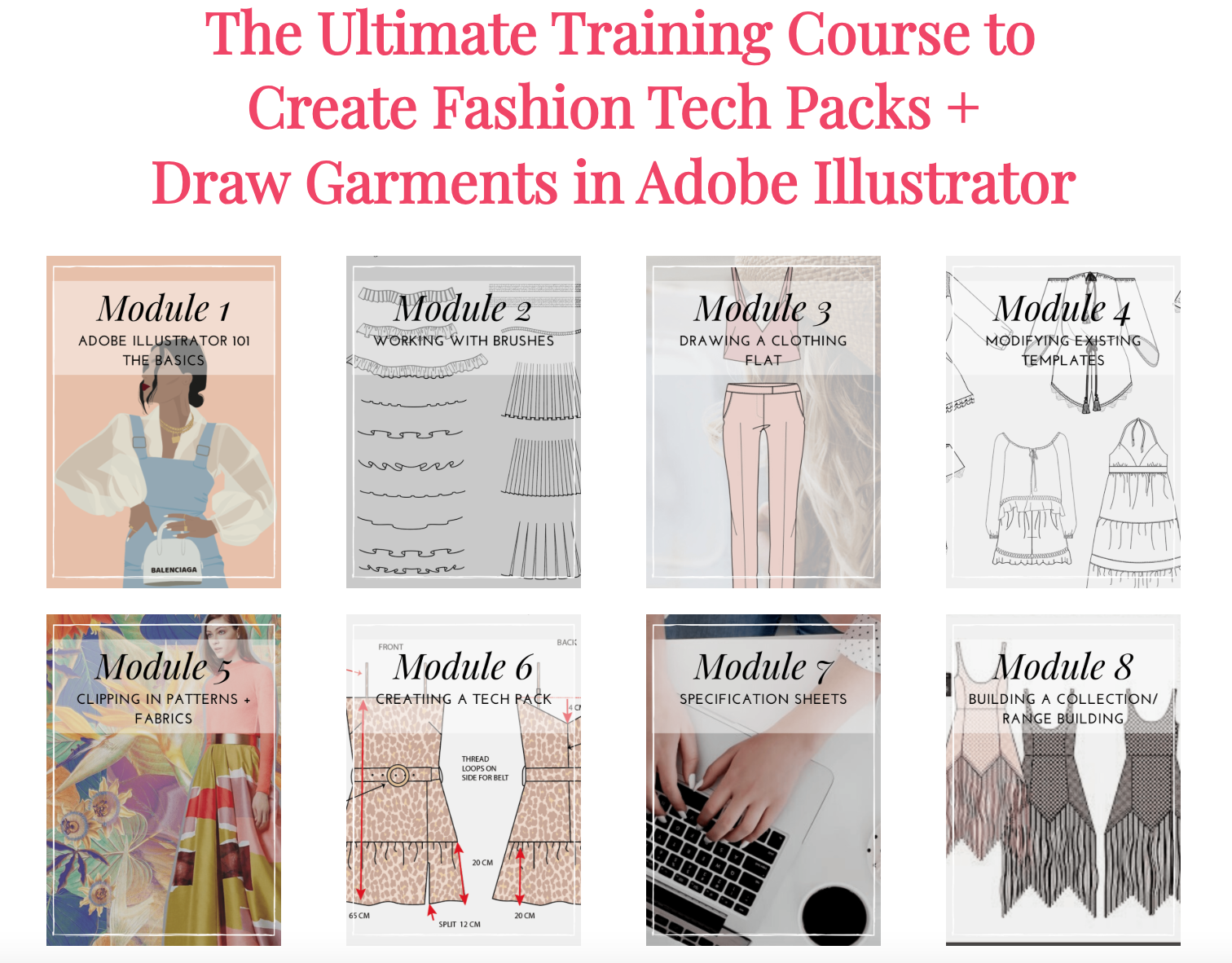
If you learn the required technical skills, you can prepare your own tech packs using suitable software and templates.
You’ll still need to account for your time, software and any technical support required.
This can be an attractive option for aspiring designers who want to develop multiple garments or build their own clothing brand.
 Option 2: Hire a Freelance Fashion Designer
You can hire a technical fashion designer to create a tech pack for you.
The cost will depend on the complexity of the garment, the number of technical drawings required, the level of specification detail and the designer’s experience.
A simple T-shirt generally requires less technical development than a structured jacket or tailored dress.
Before hiring someone, clarify exactly what the quoted service includes.
For example, does it include graded measurements, construction specifications, artwork and revisions?
Option 3: Work With a Manufacturer That Offers Product Development
Some clothing manufacturers offer technical development services.
They may help create specifications, patterns or samples from your initial concept.
However, these services may involve additional development fees.
You should also clarify ownership and access to the final technical files.
Is It Worth Learning to Create Your Own Tech Packs?
If you plan to develop an entire clothing collection, understanding tech packs can be extremely valuable.
Even if you eventually outsource the technical drawings, you’ll be better equipped to:
- Explain your designs.
- Review specifications.
- Communicate with suppliers.
- Understand sampling problems.
- Evaluate manufacturing quotations.
- Manage product development.
For someone pursuing a career in fashion design, technical product development skills can also help demonstrate practical industry capability. We can teach you haw to create your own Fashion Tech Packs for your designs- within our Start Your Own Fashion Line Course.
5 Common Fashion Tech Pack Mistakes Beginners Should Avoid
Mistake 1: Sending Only a Fashion Illustration
A beautiful fashion sketch doesn’t necessarily explain how a garment should be constructed.
Solution: Include technical flat drawings, measurements and written specifications.
Mistake 2: Forgetting Measurement Details
Simply stating that a dress should be a size 10 doesn’t tell a manufacturer the garment’s intended measurements.
Sizing can vary significantly between brands.
Solution: Develop a measurement specification sheet with clearly defined points of measure.
Mistake 3: Being Too Vague About Fabrics
Descriptions such as soft cotton, stretch fabric or premium linen leave too much open to interpretation.
Solution: Specify relevant fabric characteristics, including composition, weight, construction and approved references.
Mistake 4: Not Including Construction Details
Two garments may look similar from the outside but have very different internal construction.
Solution: Include stitching, seam and finishing requirements, particularly for design details that affect quality or appearance.
Mistake 5: Failing to Update the Tech Pack After Sampling
Your first sample may require changes to the fit, length, neckline, fabric or construction.
If you don’t update your technical specifications, those changes may not carry through to production.
Solution: Maintain a clear revision history and ensure your manufacturer uses the latest approved version.
Do You Need to Know How to Sew to Create a Fashion Tech Pack?
Not necessarily.
You don’t have to be an expert garment maker to begin learning technical fashion design.
However, understanding how garments are constructed is extremely helpful when creating accurate specifications.
For example, knowing the difference between an overlocked seam, a French seam and a coverstitched hem makes it easier to communicate with manufacturers.
Understanding garment measurements, fabric properties and construction methods also helps you identify potential problems before sampling.
If you’re starting with no previous fashion experience, a structured fashion design course can help you build these skills progressively.
Where Can You Learn to Create Professional Fashion Tech Packs?
If you’re serious about becoming a fashion designer or launching your own clothing brand, learning to create professional technical specifications is a valuable investment in your skills.
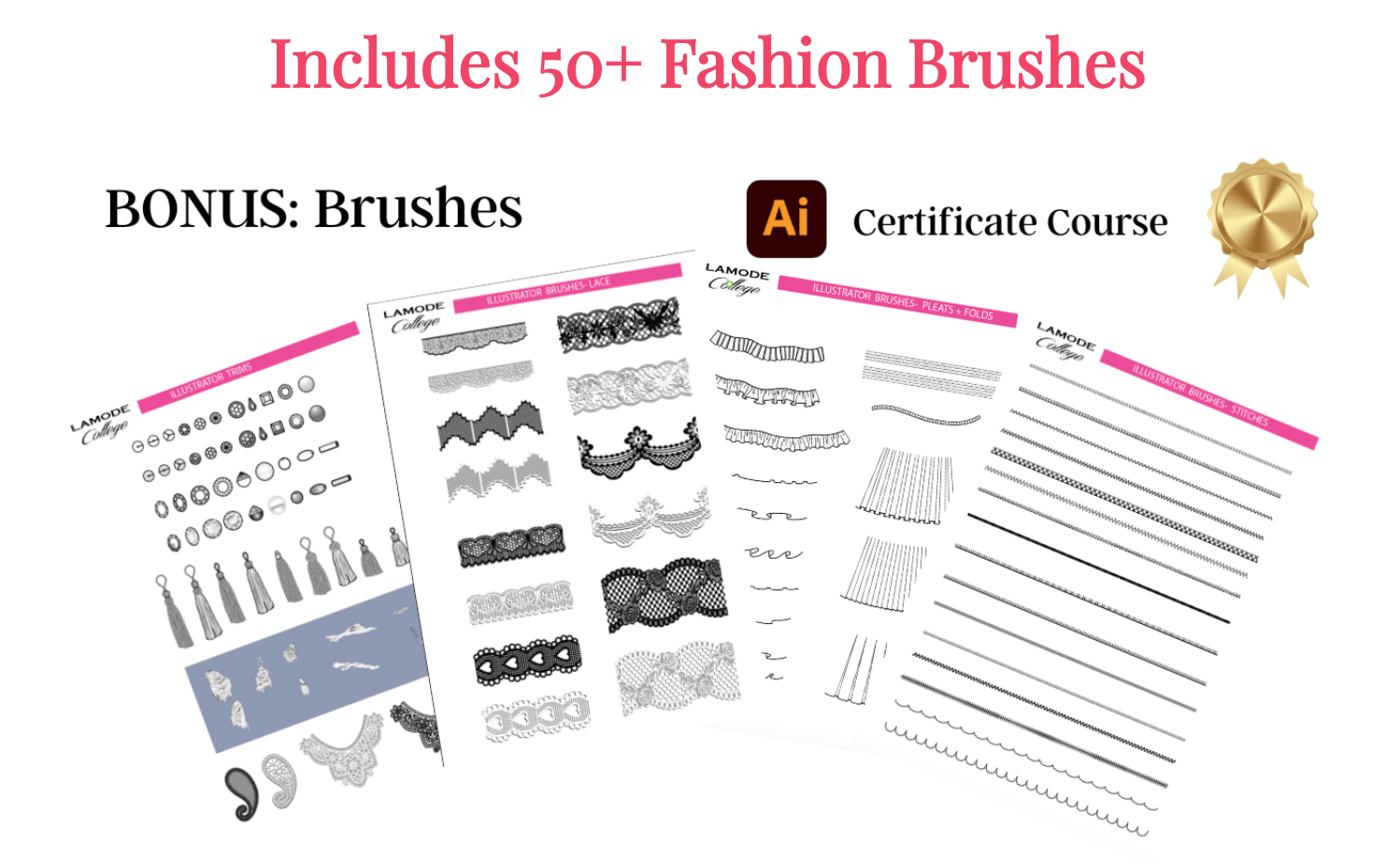
At La Mode College, our online Certificate of Professional Fashion Design is designed to help aspiring designers develop practical fashion industry skills.
Rather than focusing exclusively on creative fashion illustration, the course introduces important areas of fashion design and product development, including:
- Technical fashion drawings.
- Garment measurements and specification sheets.
- Fashion design software and digital tools.
- Fabric and textile knowledge.
- Collection development.
- Understanding how fashion designs are prepared for manufacturing.
These are valuable skills whether your goal is to work in the fashion industry or develop your own clothing collection.
Why Learn These Skills Instead of Outsourcing Everything?
When you’re starting a clothing brand, you may be tempted to outsource every technical task.
And while working with experienced professionals can be helpful, understanding the product development process gives you more control.
You’ll be better prepared to explain your designs, assess samples and communicate with manufacturers.
You’ll also develop practical work that can contribute to a fashion design portfolio.
Want to learn how to turn your fashion ideas into professionally developed designs?
Explore the Start Your Own Fashion Line Course at La Mode College and discover how you can develop practical fashion design skills through flexible online study.
Frequently Asked Questions About Fashion Tech Packs
What is a fashion tech pack?
A fashion tech pack is a technical document that communicates the specifications required to manufacture a garment. It typically includes technical drawings, garment measurements, fabric information, construction details, trims, labels and other production instructions. Clothing manufacturers use tech packs to understand designs, prepare quotations, develop samples and guide production.
Do I need a tech pack to start a clothing brand?
You don’t necessarily need a completed tech pack to begin developing a clothing brand or discussing your ideas with manufacturers. However, detailed technical specifications are usually important when developing custom garments. A tech pack helps communicate your design requirements and provides a reference during sampling and production.
Can a beginner create a fashion tech pack?
Yes. Beginners can learn to create fashion tech packs by developing skills in technical drawing, garment measurements, fabric selection and construction specifications. Starting with a simple garment, such as a T-shirt, is a practical way to learn. More complicated garments may require additional technical training or professional assistance.
What software is best for creating fashion tech packs?
Adobe Illustrator is widely used for creating technical fashion drawings. Designers may also use spreadsheets, presentation software or specialised fashion product development platforms to organise specifications. The best software depends on the garment, the designer’s experience and the manufacturer’s requirements.
Can I create a tech pack without Adobe Illustrator?
Yes. Adobe Illustrator is useful but not compulsory. You can create a tech pack using a combination of accurate technical drawings, measurement tables and written specifications. Some beginners use templates and other design software. The essential requirement is that the information is accurate, complete and understandable to the manufacturer.
Can AI generate a fashion tech pack?
AI can assist with some parts of the tech pack creation process, including organising specifications, drafting written descriptions and formatting documents. However, AI-generated measurements, construction details and technical drawings should be reviewed for accuracy. Physical samples and appropriate technical expertise remain important when developing garments for manufacturing.
What is the difference between a tech pack and a specification sheet?
A garment specification sheet generally focuses on measurements and related technical details. A tech pack is a broader document that combines measurement specifications with technical drawings, fabrics, construction instructions, trims, colours, artwork and other manufacturing requirements. The specification sheet is often one component of the complete tech pack.
How long does it take to create a fashion tech pack?
The time required depends on the garment’s complexity, the quality of the information available and the designer’s experience. A simple garment with established measurements and reusable templates may be relatively quick to document. Complex garments requiring detailed construction instructions, multiple components and size grading can take considerably longer.
Can I send a tech pack directly to a clothing manufacturer?
Yes. Once your tech pack contains sufficient information, you can send it to a manufacturer for review and discussion. The manufacturer may request clarification, additional specifications or physical references before preparing a quotation or sample. Confirm which technical information they require before proceeding.
Is learning fashion tech packs useful for getting a job in fashion?
Yes. Technical drawing, garment specifications and product development knowledge are relevant to several fashion industry roles, including fashion design, assistant design and product development. A portfolio containing accurate technical drawings and specification sheets can help demonstrate practical skills to potential employers.
Final Thoughts: Turn Your Fashion Ideas Into Products
Creating a clothing collection involves more than designing garments that look beautiful.
To bring your ideas to life, you need to understand how those garments will be developed, measured, sampled and manufactured.
A fashion tech pack is one of the most important tools in that process.
It helps bridge the gap between your creative vision and the technical requirements of clothing production.
And the good news is that these are skills you can learn.
Whether you’re planning your first clothing brand or hoping to build a career as a fashion designer, understanding technical fashion design can help you approach product development with greater confidence.
Ready to take your fashion design skills further?
Discover La Mode College’s Start Your Own Fashion Line Course– and start developing the practical skills needed to turn your ideas into professionally designed fashion collections.
If you would like further reading about Starting Your Own Fashion Line- these article may be of interest:
How To Start a Profitable Fashion Brand
How to Get Your Fashion Brand Stocked in a Fashion Boutique
How to Start a Clothing Brand in Australia
Get a Free Course Brochure Here:

Written by Annette Miller, fashion industry entrepreneur and Course Principal at La Mode College. Annette’s industry background includes founding and developing a fashion label sold through Australian and international retailers, with firsthand experience in clothing design, product development and manufacturing.